Get in touch: +1 888 904 4161


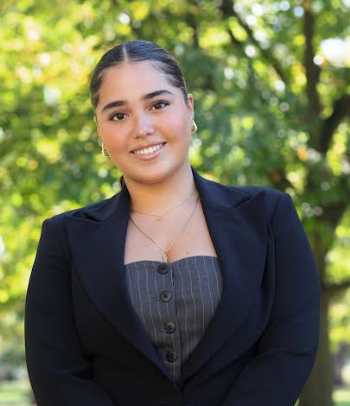
Máxima Oxholm-Barraza is the President & Founder of Oberlin Pre-Law Society.
Members of the OPLS often tell me that the part of the organization they like the best is the effort to connect students with practicing attorneys and alumni through panels, workshops, and other career-focused programming. Those events help students better understand the range of possibilities within the legal profession and give insight into different practice settings. I think that kind of exposure is particularly important for students who do not enter law school with an existing legal network. OPLS also created more immersive opportunities, including a field trip to the Cleveland office of a global law firm, which allowed students interested in Big Law to observe that environment firsthand and gain a clearer sense of the day-to-day work.
One of the biggest pressures is making every experience look directly connected to law, as if every club, job, class, or summer opportunity has to fit neatly into a box. Everyone’s path is different. Some students may have a very definite legal focus early on, and that is great. Others may still be exploring, and that is also completely okay. Not everyone needs to have a resume that looks legal from beginning to end, and not every meaningful experience has to be labeled as “pre-law” to matter. Some of the experiences that have shaped me were not formally legal at all: journalism, language and culture study, athletics, campus leadership, and community work. Good law school candidates are people who have spent time exploring different interests, serving their communities, learning how to work with people, and understanding who they are outside of their resumes.
I would remove the expectation that a pre-law student has tohave A-list internships to be taken seriously by law schools. I wrestled with that myself. I tried to get a legislative internship, and while I was able to get interviews, I did not ultimately get one of those coveted positions. At first, that felt discouraging, because it is easy to interpret rejection as a sign that you are falling behind. But not getting one specific internship does not mean all is lost. It does not mean you are not capable, and it does not mean you are no longer a competitive law school applicant. I think pre-law students should feel more freedom to choose internships and experiences that are genuinely interesting to them and where they can make a contribution, learn something, and grow. A meaningful internship does not have to have an impressive title.
Students are definitely becoming more open about burnout and mental health, but I do not think that openness always translates into feeling allowed to slow down. Pre-law students are often predisposed to doing more and more. At a place like Oberlin, where students care deeply about doing meaningful work, it can be hard to tell the difference between healthy ambition and overextension. Even when students can recognize that they are overwhelmed, taking a break can still feel like wasting time. The challenge is helping students understand that resilience is not separate from preparation. Law school and the legal profession require discipline, but they also require judgment and the ability to know when you need support.
Social media can be useful as a tool for information, but I think it has also become a place where students measure their worth. I try to remind myself that an algorithm is not an advisor, and someone else’s highlight reel is not a standard I need to meet. On TikTok and Instagram, students often see the internship announcements, law school acceptances, and polished “day in the life” posts, but they do not always see the trial and error behind those moments. It is important to remember that someone else’s timeline is not the measure of your own progress. Sometimes the healthiest thing a pre-law student can do is set social media aside and focus on becoming, rather than on posting.
The obvious financial reality is that law school itself is expensive, so students have to think seriously about whether they want to make that investment. I wish people would talkmore about how the financial burden of becoming a lawyer does not start with law school tuition. It starts with buying an LSAT course and materials, taking time for an unpaid internship, travel costs to explore an opportunity, or having the flexibility to spend months preparing applications while also working. That matters because financial pressure can shape confidence as much as opportunity. Students may look at the path to law school and decide, before they have even applied, that it was not built for them. One goal of the OPLS is to make the process less isolated by sharing free resources, demystifying fee waivers and timelines, and connecting students with people who took different paths. Access is not only about information; it is also about making students feel that law remains a realistic option.
Juris Education is proud to interview student leaders like Máxima Oxholm-Barraza to share valuable insights on balancing academics, legal experience, burnout, social media pressures, and the financial realities of pursuing a career in law.

.svg)
