Get in touch: +1 888 904 4161


March 26, New York, NY: The rising cost of legal education is reshaping how prospective law students think about their future. A recent survey of 243 respondents reveals growing financial anxiety and a strong openness to alternative law school formats that reduce both time and debt.
As tuition climbs and federal loan policies tighten, many aspiring lawyers are questioning whether the traditional three-year law school model still makes sense.
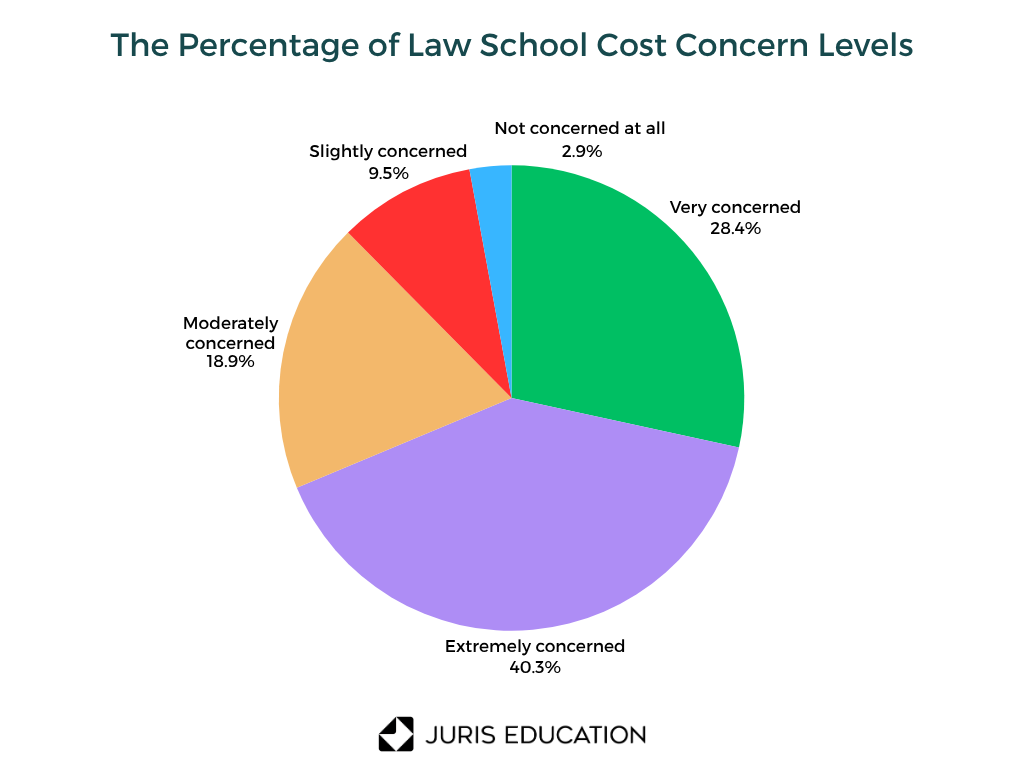
Law school affordability is no longer a background concern; it’s a central issue for most prospective students.
This suggests that financial pressure is not limited to a subset of applicants; it’s a near-universal consideration.
Many students anticipate graduating with significant debt, which heavily influences their decision-making.
With a meaningful portion expecting six-figure debt, the return on investment of a legal education is increasingly under scrutiny.
Financial pressure is not just influencing how students pursue law; it’s affecting whether they pursue it at all.
This is a critical signal: affordability challenges may be shrinking the future pipeline of lawyers, particularly among lower- and middle-income students.
Recent or proposed federal limits on graduate borrowing are amplifying concerns.
The combination of high tuition and borrowing constraints creates a difficult equation for prospective students to solve.
One of the clearest findings from the survey is a strong openness to alternative law school formats.
This mirrors trends seen in other professional fields, where accelerated programs are gaining traction as a cost-saving alternative.
When asked how law schools could reduce financial burden, respondents emphasized:
Students are not just asking for cheaper education, they’re asking for better value.
The traditional three-year law school model has remained largely unchanged for decades. But this data suggests that change may be on the horizon.
With:
Law schools may need to rethink both the structure and pricing of legal education.
Programs that combine shorter timelines with real-world training could become a compelling option for the next generation of lawyers.
Prospective law students are sending a clear message:
The current cost of legal education is too high, and they are ready for alternatives.
Institutions that offer innovative, affordable pathways may not only attract more applicants but also help ensure the legal profession remains accessible to a broader, more diverse population.


.svg)
