Get in touch: +1 888 904 4161


Passing the bar exam is your one-way ticket to earning your license to practice law in your state. While the bar is notoriously challenging, Juris Education is committed to helping legal professionals navigate this last hurdle.
We developed our Bar Exam guide to provide an overview of the bar, including:
Get your free guide delivered to your inbox by completing the form above!
Bar exam requirements vary significantly depending on where you plan to practice. Below is a quick overview of the exams we cover most often - including the Uniform Bar Exam and the state-specific exams in California, New York, Florida, Georgia, and Virginia - plus the MPRE, the ethics exam nearly every jurisdiction requires.
The Uniform Bar Exam is a standardized, two-day exam developed by the National Conference of Bar Examiners (NCBE) and adopted by the majority of U.S. jurisdictions. It consists of three components:
The UBE is scored on a 400-point scale, and passing scores typically range from 260 to 273 depending on the jurisdiction. One of the UBE's biggest advantages is score portability - you can transfer your score to other UBE jurisdictions instead of retaking the exam. Note that the NCBE is rolling out the NextGen Bar Exam beginning in July 2026, with jurisdictions transitioning on different timelines, so always confirm which format your state will administer.
New York is a UBE jurisdiction with a passing score of 266. In addition to the UBE, candidates for admission in New York must complete the New York Law Course (NYLC), pass the open-book New York Law Exam (NYLE), and achieve a qualifying MPRE score. New York is one of the most popular jurisdictions for bar candidates - including foreign-trained LLM graduates - which makes a structured study plan especially important.
California administers its own two-day exam rather than the UBE, and it's widely considered one of the toughest bar exams in the country. The exam includes a written day (five essays and a performance test) and a multiple-choice day (200 questions), with a passing score of 1390 on a 2000-point scale. California has also been revising its exam format in recent administrations, so candidates should verify the current structure with the State Bar before their test date.
California is also home to the Baby Bar - formally the First-Year Law Students' Examination (FYLSX). Students at certain unaccredited or State Bar-registered law schools, as well as those studying through the Law Office Study Program, must pass this one-day exam (four essays and 100 multiple-choice questions) after their first year of law study to continue earning credit toward their JD.
Florida has not adopted the UBE. The Florida Bar Exam is a two-part test: Part A covers Florida-specific law through essays and multiple-choice questions, while Part B is the MBE. Candidates need a scaled score of 136 on each part to pass, along with a qualifying MPRE score. Because Part A tests Florida law and procedure directly, out-of-state graduates often need dedicated Florida-specific preparation.
Georgia adopted the UBE in 2021 and requires a passing score of 270 - one of the higher thresholds among UBE jurisdictions. Georgia candidates must also satisfy the state's MPRE requirement and complete Georgia's character and fitness process before admission.
Virginia administers its own two-day exam rather than the UBE. Day one features Virginia essay and short-answer questions testing state law, and day two is the MBE. A combined scaled score of 140 is required to pass. Virginia also has some distinctive administration rules - including its well-known courtroom attire requirement on exam day - so candidates should review the Virginia Board of Bar Examiners' guidelines closely.
Before you can be admitted in nearly any U.S. jurisdiction, you'll also need to pass the MPRE - two-hour, 60-question multiple-choice exam testing legal ethics and professional conduct. It's offered three times per year (typically March, August, and November), and passing scores range from 75 to 86 depending on the jurisdiction. Many candidates take the MPRE during law school, often after completing their professional responsibility course.

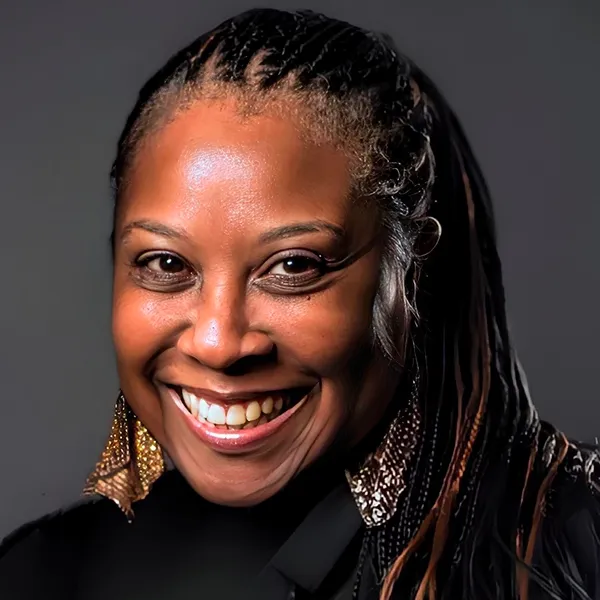
As Associate Dean for Student Affairs at CUNY School of Law and Union Theological Seminary, Yvette supported students academically, professionally, and personally. At Union, she also served as Assistant Director of Recruitment, giving her direct experience in application review and admissions outreach. She has advised students on character and fitness certification, guided them through bar admission, and contributed to institutional admissions strategy.
Yvette’s lengthy higher education journey includes a BA in international studies, culture, and communications from CUNY, an MA in sociology and applied social research from Queens College, and a JD with a focus in housing and community economic development from CUNY School of Law. Yvette also earned a Master of Divinity in psychiatry, religion, and social ethics from Union Theological Seminary, and EdD in higher education management from UPenn. She has also received multiple certifications in project management, business management, executive leadership, human rights & business consulting and others from the U.S. Institute of Diplomacy & Human Rights, the Management & Strategy Institute, Cornell University, and the NYC Department of Health & Mental Hygiene.
Beyond admissions and education, Yvette has extensive experience in nonprofit leadership as Chief Operating Officer of a housing and economic development organization and Executive Director of a residential shelter, where she managed multimillion-dollar budgets and mentored emerging leaders. She has chaired the Penn GSE Executive Doctorate Alumni Advisory Board, held leadership roles with University of Pennsylvania alumni associations, and provided pro bono coaching for nonprofit executives. In addition, she served for 15 years on the board of the Fair Housing Justice Center in New York City, including as Board Vice President, where she built partnerships that created internships and educational opportunities for law students and lawyers.
While pursuing her MDiv, Yvette was selected as a Henry Luce Fellow in Indonesia, where she worked with academic and cross-cultural research centers to advance international collaboration and leadership development. More recently, Yvette’s thought leadership has been featured in preLaw Magazine and the New York State Bar Association’s Attorney Well-Being Report. She has also led workshops with the Law School Admission Council’s RISE initiative and received Outstanding Education Leadership and Teaching and Scholarship Trailblazer Awards.
As a coach and mentor, Yvette is known for a student-centered approach that helps applicants tell authentic and impactful stories, claim ownership of their admissions journey, and move through the process with clarity. Students Yvette has coached have been accepted to Columbia Law School, Fordham School of Law, New York Law School, and CUNY School of Law, among others.
Students describe Yvette as an inspiring guide who draws out the narratives they might not have recognized in themselves—she shows them how those stories can ground and sustain them through what they will experience in law school and as they enter the legal profession. Throughout her career, Yvette has been known to create cultures of care and belonging where students feel supported, empowered, and ready to thrive. At the heart of her work is a commitment to helping students find their place and voice in law school.
Yvette enjoys the arts, reading, traveling, and celebrating life with her husband, Arthur, a neuroscience and mindset coach.

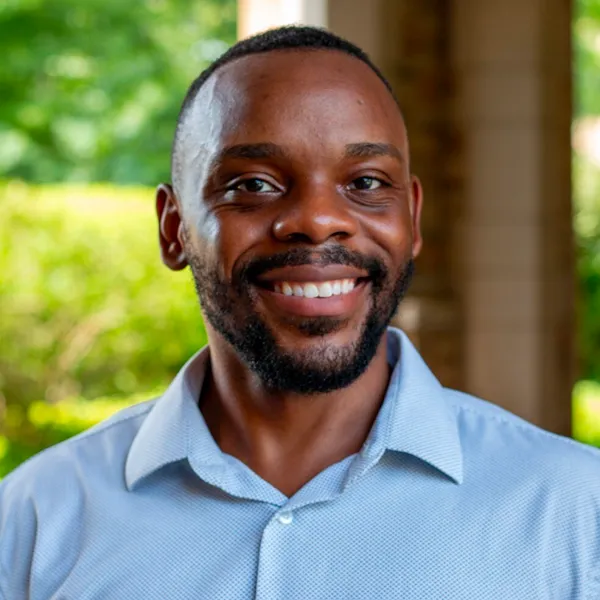
Before attending law school, Max graduated from Iona University with a BA in international studies and philosophy. He also earned an MSC in social and cultural psychology from the London School of Economics. As a student at Notre Dame Law School, Max was involved in the Journal of International & Comparative Law, the Journal of College & University Law, and Moot Court International.
Max returned to Notre Dame years after graduation to become the inaugural Director of Diversity, Equity, and Inclusion, where he helped enroll the most diverse entering classes in Notre Dame’s history. In partnership with the admissions office, he evaluated thousands of personal and diversity statements, revamped recruitment strategies, and launched initiatives that led to a 7% increase in minority enrollment and $17.1 million in new tuition revenue. While serving as Director, Max created signature initiatives like the Dean’s Initiative for Leadership and Scholarly Excellence—a pre-law pipeline offering financial support, mentorship, and academic preparation for historically excluded students. Max is also the host of The Welcome Table for Notre Dame, a podcast where he interviews educators, advocates, and students on law school admissions, equity, and belonging.
Max’s admissions expertise is shaped by his broader legal career, which spans both civil rights and international advocacy. As a staff attorney with the ACLU of Florida, he led a team that successfully challenged the state’s anti-protest law, restoring constitutional protections for more than 21 million Floridians. He also worked as a litigation consultant in New Delhi, advising advocates before India’s Supreme Court on cases involving human rights abuses and systemic discrimination. Earlier in his career, Max prosecuted domestic violence cases in Chicago and represented clients in complex antitrust disputes.
As a coach, Max is known for his thoughtful and values-driven approach. He believes every applicant has a story worth telling—and he works closely with students to uncover their motivations, craft narratives that reflect their authenticity, and submit applications that stand out for both polish and heart. As an attorney, higher education leader, and seasoned admissions advisor who has dedicated his career to advancing justice, equity, and opportunity, Max is passionate about helping aspiring lawyers find their voices in the admissions process.
Outside of his work with students, Max serves on the board of Karuna USA, a nonprofit advancing human rights across the U.S. and South Asia, and finds grounding through meditation, travel, and exploring new cultures through food and language.

John earned a Bachelor of Science from Cornell University before completing his JD at Brooklyn Law School, graduating summa cum laude on a full-ride scholarship. Serving on Cornell's admissions and administrative committees has given him insider tips on what law schools look for in successful applicants, and he uses this knowledge to guide students through every step of the application process. His expertise has helped students gain acceptance to top law schools, such as Columbia, NYU, Cornell, Georgetown, UC Berkeley, Duke, and UVA.
A former corporate attorney and retired member of both the New York and New Jersey State Bars, John's passion for counseling is evident in his dedication to providing personalized advice and support to each student. He enjoys drawing upon his considerable experience to guide students through the various aspects of the law school application process, including school selection, pre-law coursework and resume building, essay drafting, and interview preparation. His commitment to helping students succeed extends beyond the application process, as he continues to offer guidance and support throughout their law school journey.
One of John's key strengths is his ability to analyze and interpret law school statistical data as reported by law schools to the American Bar Association, US News & World Report, and other media outlets. This expertise enables him to provide students with knowledge of the competitive landscape of law school admissions and to help them identify schools that best align with their goals and qualifications.
When he's not advising students, John enjoys spending time outdoors, hiking, and gardening in the beautiful Finger Lakes Region of New York State, where he lives with his wife, Jennifer, and their dog, Enzo.


.svg)
