Our Black Friday Sale Is Here
Ends In:
00
D
00
H
00
M





When students think about careers that combine law and medicine, medical malpractice is often the first thing that comes to mind. But healthcare law is much broader than that, with opportunities to advocate for patients, advise hospitals, and shape healthcare policies.
And while you might assume that becoming a medical lawyer requires some medical training, the path is actually similar to becoming any other type of lawyer. Below, I’ll walk you through how to join this specialty and what to expect from a career in healthcare law.
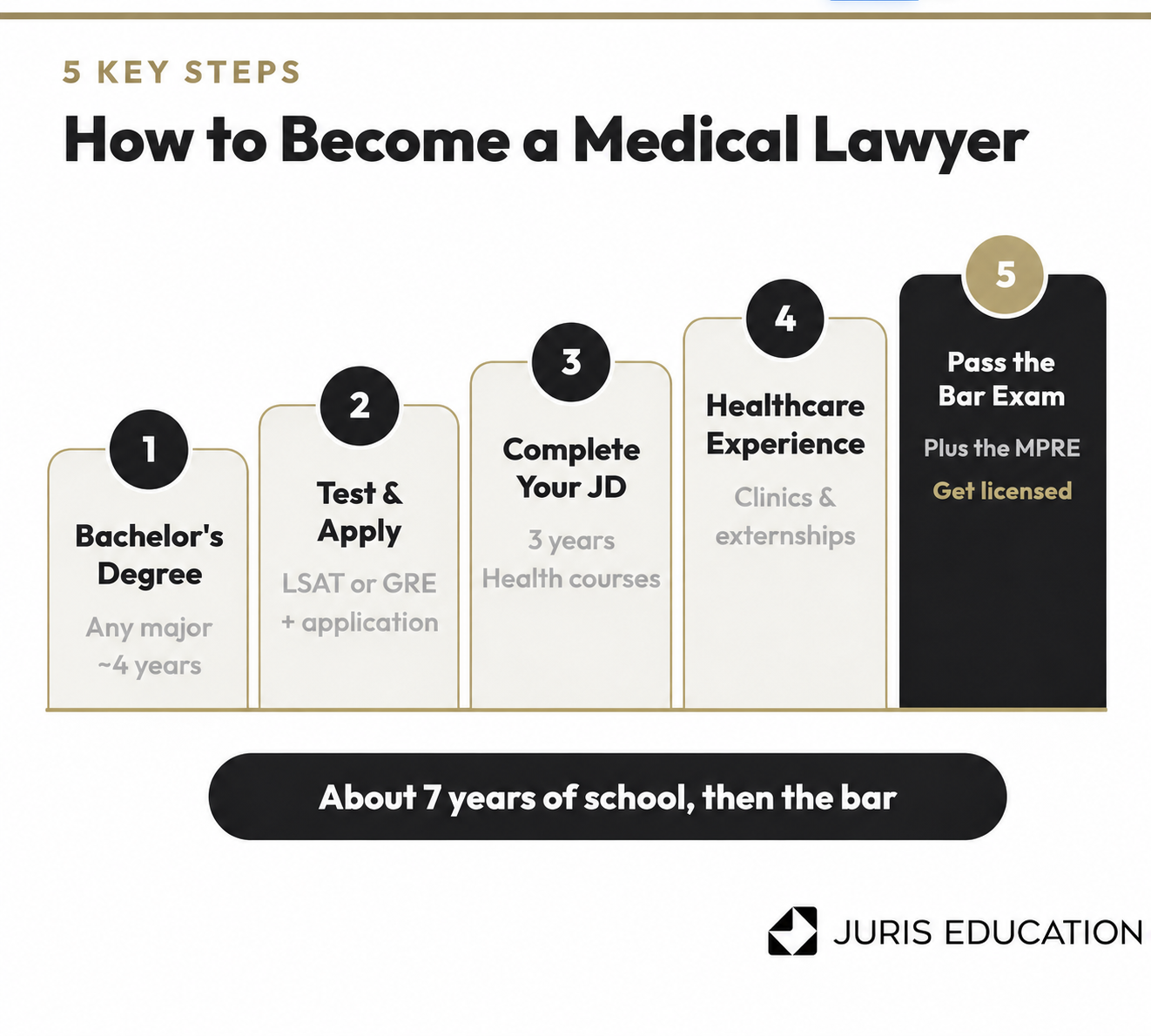
Start by completing a four-year undergraduate degree at an accredited college or university. You don't need to major in a specific subject to get into law school, but some students interested in healthcare law choose biology, public health, political science, or a related field.
That’s not necessary, though. Instead, I'd recommend choosing a major that genuinely interests you and allows you to maintain a competitive GPA. Law schools care more about your academic performance than whether your major relates to your intended field of law.
The Law School Admission Test (LSAT) is the most common and preferred standardized test by law schools, even though some schools accept the GRE instead.
The rest of your application should include:
If you're specifically interested in healthcare law, I'd recommend looking for opportunities that demonstrate your interest in both legal issues and healthcare.
For example, you could volunteer with a patient advocacy organization, work at a healthcare nonprofit, or participate in research involving healthcare policy.
These experiences can also give you meaningful examples to discuss in your personal statement.
You can get expert support with your application to ensure each of these components stands out and that you get into your top choices.
After getting accepted to law school, you'll typically spend three years earning your JD. During your first year, you'll study foundational subjects such as constitutional law, contracts, civil procedure, torts, and legal research and writing.
As you move into your second and third years, you'll have more opportunities to explore healthcare-related subjects. You should also consider attending a school that offers healthcare law clinics, specialized courses, or opportunities to work with hospitals and healthcare organizations.
You don't necessarily need to attend a law school with a dedicated healthcare law concentration. However, access to relevant coursework and practical experiences can help you explore the field before graduating.
One of the best ways to understand healthcare law is to gain experience working on actual legal matters. During law school, look for internships, externships, summer associate positions, or clinics involving healthcare organizations.
You might find opportunities with:
After graduating from law school, you need to get licensed before you can practice. To do that, you’ll need to pass the bar exam in the state you plan on practicing in. You may also need to pass the Multistate Professional Responsibility Examination (MPRE), depending on your jurisdiction.
Yes, becoming a medical malpractice attorney is hard because you need to complete the same educational requirements as other lawyers while also developing a strong understanding of complex medical issues.
Medical malpractice lawyers need to review complicated medical records, consult medical experts, and understand the decisions healthcare professionals make. They also need to determine whether a healthcare professional failed to meet the expected standard of care and whether that failure amounts to medical negligence under the law.
It typically takes around 7 years to become a medical lawyer in the United States, including 4years to earn a bachelor's degree and 3 years to complete law school.
You'll also need additional time to prepare for and pass the bar exam and complete your jurisdiction's licensing requirements.
Here's what the typical timeline looks like:
Healthcare lawyers make an average of approximately $98,000 to $114,000 per year, according to estimates from ZipRecruiter and Salary.com.
But salaries vary significantly based on experience, location, and the type of organization you work for.
One of the biggest factors influencing your earning potential is experience. According to Robert Half's 2026 Salary Guide:
The longer you work, the more you earn. Where you work also matters.
For example, a healthcare lawyer at a big corporate firm typically earns significantly more than someone working for a government or nonprofit agency. Attorneys who work directly for hospitals or pharmaceutical companies also have different compensation structures from those working in private practice.
Yes, pursuing a career as a medical lawyer can be highly rewarding because you advocate for wronged patients, can influence public health policies, and can drive meaningful change in healthcare. The legal profession is also projected to grow by 5% over the next decade, so demand for skilled medical lawyers is strong.
No, you don't need a medical degree to become a medical lawyer. You only need to complete the educational and licensing requirements for practicing law. Having a strong understanding of medical terminology, healthcare procedures, and the healthcare system can be particularly helpful, but you can develop this knowledge through law school courses, internships, and professional experience.
Malpractice lawyers are specialized healthcare lawyers. They specialize in cases involving alleged medical negligence, such as surgical errors, misdiagnoses, or improper treatment. Healthcare lawyers work in a much broader field. They may handle medical malpractice cases, but they can also advise hospitals on regulatory compliance, represent healthcare businesses, negotiate contracts, or work on healthcare policies.
Co-Founder of Juris Education, Dartmouth College